
Wheel of the Year
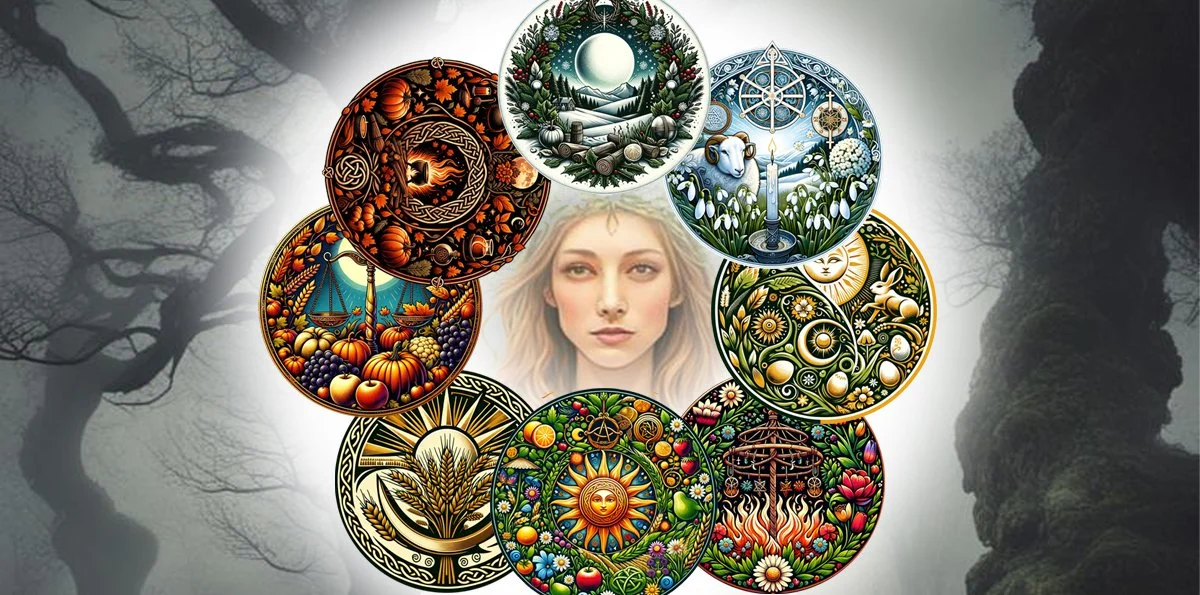
The Wheel of the Year
The Wheel of the Year is a concept that represents the cycle of seasons and the changing of the natural world throughout the year. It is a spiritual and symbolic framework that is followed by many modern pagan and earth-based traditions. The Wheel of the Year is divided into eight Sabbats, or festivals, that mark key points in the seasonal cycle. Each Sabbat has its own set of themes, symbols, and rituals that are observed to commemorate the changing of the seasons and connect with the rhythms of nature. The Pagan Wheel of the Year’s eight Sabbats are divided into two main categories:
Solar Sabbats (The Quarter Days): These mark the solstices and equinoxes.
Fire Festivals (The Cross-Quarter Days): These are traditional Celtic festivals that fall between the solar events.
The Eight Sabbats of the Wheel of the Year
Solar Sabbats (Quarter Days)
These are based on the position of the sun and include the solstices and equinoxes.
Yule (Winter Solstice)—Around December 21st
· The longest night and shortest day of the year.
· Celebrates the rebirth of the sun and the return of light.
· Themes: Renewal, rebirth, hope, and introspection.
· Traditions: Lighting candles, decorating trees, feasting.
Ostara (Spring Equinox) – Around March 21st
· Equal balance of day and night.
· Celebrates fertility, renewal, and new beginnings.
· Themes: Growth, balance, and transformation.
· Traditions: egg decorating, planting seeds, honouring fertility deities.
Litha (Summer Solstice) – Around June 21st
· The longest day and shortest night of the year.
· Celebrates the height of the sun’s power and abundance.
· Themes: Strength, passion, energy, and protection.
· Traditions: bonfires, dancing, honouring solar deities.
Mabon (Autumn Equinox) – Around September 21st
· Another day of equal light and darkness.
· Celebrates the second harvest and gratitude.
· Themes: Balance, reflection, preparation for winter.
· Traditions: feasting, giving thanks, honouring ancestors.
Fire Festivals (Cross-Quarter Days)
These are Celtic festivals that mark key points in the agricultural cycle.
Samhain – October 31st to November 1st
· The end of the harvest and the beginning of the dark half of the year.
· A time to honor ancestors and the spirits of the dead.
· Themes: Death, rebirth, divination, and remembrance.
· Traditions: Ancestor altars, bonfires, carving pumpkins.
Imbolc – February 1st to 2nd
· Celebrates the return of the light and the first stirrings of spring.
· Honoring Brigid, the goddess of fertility and healing.
· Themes: Purification, renewal, creativity.
· Traditions: Candle lighting, cleaning, setting new intentions.
Beltaine (Beltane) – April 30th to May 1st
· A festival of fire, fertility, and passion.
· Celebrates the union of the God and Goddess.
· Themes: Love, sensuality, abundance, and growth.
· Traditions: Maypole dancing, fire rituals, handfasting ceremonies.
Lughnasadh (Lammas) – August 1st
· The first harvest festival honoring the grain god Lugh.
· A time of gratitude, abundance, and preparation for autumn.
· Themes: Hard work, sacrifice, and sustenance.
· Traditions: Baking bread, feasting, competitive games.
Using the Wheel of the Year
For all those who feel a connection with nature, the Wheel of the Year acts as a calendar marking the equinoxes, solstices, and traditional festivals. It brings awareness of the seasons and their significance, whether you choose to spend time outdoors or simply observe the changing seasons. Engaging in nature-based practices can help us feel more grounded, connected, and in tune with the rhythms of the earth. By honouring and celebrating the cycles of nature, we can cultivate a deeper sense of appreciation for the world around us. Additionally, connecting with nature can also provide a sense of peace, rejuvenation, and inspiration that can benefit our overall well-being. As we continue to deepen our relationship with the natural world, we can learn valuable lessons about resilience, growth, and the interconnectedness of all living beings.
Pagan Art has created their own Wheel of the Year wall poster; symbols depicting the eight sabbats surround an image of the goddess Brigid amongst snowdrops, the flower that symbolizes spring.
